The combined population of just 6 metros of India in 2020:
Mumbai: 260 million
Delhi: 260 million
Calcutta: 185 million
Chennai: 88 million
Hyderabad: 86 million
Bangalore: 99 million
Most of this sudden jump is due to the continuing influx of people from rural India into these cities. Already the traffic is choking and the air quality is punishing. The dwellings are seeing a vertical growth and thousands of skyscrapers are coming up. To accommodate these millions the governments are coming out with mass transport system of varied varieties. Roads are widened and the local governments fetch water for these thirsty millions from far away locations.
Simply fire fighting is on. Every one thinks that the number of sky scrapers found in a city is an indicator of 'GROWTH'. We call it as development. Quite often Singapore is shown here as a model state. Singapore is a small, heavily urbanized, island with just 714.3 square kilometers, whereas India is of 3,287,590 km². The Chennai city alone is of 1189 km.
The suggestion is to reduce the population influx into these cities. One of the options may be encouraging entrepreneurs to allow their staff to work from their homes. According to conventional estimates at least 50% of the work done in our software parks can be executed from their own homes. If Arizona work can be done in New Delhi, why not the same from Rohtak or Bhiwandi? In such cases the salary can be a reduced one as the employees may not be spending much for their accommodation, transport and food much as they continue to live in their regular homes. We can make our traffic free as thousands of Volvo buses need not glide blocking the entire traffic. Also the fuel consumption would be reduced resulting in less carbon release. Many more advantages are there in allowing the newly recruited employees from their homes. The productivity would improve as they are with their parents or families. More money can be saved. Most important benefit is they save around 4 hours a day, which they may be spending in commuting and inhaling stale air. Soon this may become a law in India mandating companies to allot and show at least 50% of their work done off-campus.
Ironically we call all these concreted, radiating, land intensive, Ozone depleting, energy guzzling units as 'soft ware parks'.
Used Cooking Oil is fast becoming an alternate to fossil oil. Millions of tons of oil is consumed and an equal amount of oil is dumped into drains clogging the drainage lines. There are people who use and reuse and reuse till the cooking oil is fully burnt or spent up. Doctors say that we should not reuse oil once utilized. Since the cost is high most of us are not throwing the oil down in the drain once it is used for 'one frying'. Slowly health-conscious people are not doing so and big hotels and restaurants and factories that use oil for preparations of fried fast food are with lot of oil that cane be converted into with some simple processes. This has to pick up fast. Also the bio-fuel yielding plants have started slowly competing for land and water with our regular food/cereal crops. Naturally the farmers would go for the crops that give them higher yield.
India is the world's leading importer and consumer of edible oils in the world. Of the total 5.0-5.5 million tons of vegetable oils imported by India annually, 1.3-1.5 million tons is soyabean oil, imported mostly form Argentina, Brazil and US , nearly 3 million tons of palm oil is purchased from Malaysia and Indonesia.
Biodiesel is an organic, non-toxic and biodegradable fuel made from everyday renewable resources, like vegetable oils or animal fats. It can power your car's engine and help the environment at the same time. It doesn't contain any petroleum, so forget about escalating gas prices. Biodiesel cuts down on CO2 emissions; in fact, it's the only alternative fuel to have fully completed the health effects testing requirements of the US Clean Air Act. Biodiesel can be purchased at a growing number of fuelling stations around the world but you can also make it in your own backyard. Even if you don't like chemistry, you can brew your own.
Steps
1
Take appropriate precautions. There are a few important factors to keep in mind when making your own fuel. During all stages of making bio-diesel, always work in a well-ventilated area and away from pets and children.
2
Collect your oil. You can spend the extra money and buy new cooking oil or you can find a restaurant and ask them if you can take their used cooking oil off their hands. Used cooking oil will have a darker color to it and will most likely have chunks of your favorite fried foods floating around. You will need to get rid of these before making biodiesel homebrew.
3
Remove the chunks. Filtering your used cooking oil will eliminate the chunks of food and other particles before your begin your biodiesel homebrew process. Larger chunks can contain water and can mess up your biodiesel reaction.
As you pour out your used cooking oil let it completely run through the filter. The filter doesn't need to be too fine. A paint strainer or window screen will adequately remove the particles that are large enough to affect the biodiesel reaction.
You will notice large chunks of fried mystery food collecting in the filter. This filtration process can be fairly quick, but you can let the filtered biodiesel settle anywhere from a couple of hours to a couple of days to let the smaller particles settle out.
Smaller suspended particles should also be allowed to settle so they doesn't attach to your heating element and muck up your processor.
Once settling is complete, begin transferring your used cooking oil to the reaction tank on your processor.
4
Transfer to the tank. Take the hose that connects the collection barrel to the reaction tank on your biodiesel compressor and connect it to the pump.
Open up the valve on the reaction tank and open the valve on the bottom of the collection barrel.
To activate the transfer, simply turn on the pump on your processor.
You will notice the dark, used cooking oil traveling out of the bottom of the collection barrel, through the pump, through the processor and up into the hose that empties into the reaction tank.
5
Heat it up. As your cooking oil makes its way into the reaction tank, you need to heat up the oil to about 120 or 130 °F (49 or 54 °C). During the heating process, the pump on your compressor will circulate the oil. Circulating and heating the oil distributes the heat and prevents the oil from getting too hot right near the heating element. This heating and circulation process will take approximately one to four hours. Factors that affect heating time:
amount of oil
temperature of oil
air temperature
processor insulation
strength of heating element
6
Begin your bio-diesel fuel process. You have just finished properly filtering your used cooking oil. By choosing to use an alternative fuel, you are helping to cut down on CO2 emissions, cut dependence on oil imports and saved yourself some money.
Caution: Remember you are dealing with a fuel. The ideas are for thorough professionals and experts and definitely not for amateurs, students and fun lovers.
Around 70 per cent of industrial discharge in developing countries goes untreatedNairobi, 2 February 2015 - Only 20 per cent of global wastewater is currently being treated, leaving low-income countries hardest hit by contaminated water supplies and disease, according to a UN report which encourages governments to see treated wastewater as a valuable resource, and a priority for the post-2015 development agenda.
With urban populations estimated to double in the next four decades, and low-income countries possessing only 8 per cent of the required capacity to treat wastewater effectively, Wastewater Management, A UN-Water Analytical Brief, produced by the World Health Organization (WHO), the United Nations Environment Programme (UNEP) and UN-Habitat, on behalf of UN-Water, describes the damage being done to ecosystems and biodiversity as 'dire' and warns of the threat wastewater will increasingly pose to human health, economic activity, and water security if left unaddressed.
The report argues that wastewater management has been neglected in the rush to commercialize drinking water production, a situation exacerbated by a fragmented water management system in many countries, and the use of different technologies that are often designed separately and retrofitted to existing systems.
The Chair of UN-Water, Michel Jarraud said, "Wastewater has featured heavily in the discussions on the Post-2015 Development Agenda. Countries have recognized that economic and sustainable development must incorporate water resources, wastewater and water quality. This publication contributes to the ongoing discussions and will hopefully serve to inform policymakers."
UN Under-Secretary-General and UNEP Executive Director Achim Steiner said, "Wastewater management has been neglected in the rush to commercialize drinking water production, a situation exacerbated by a fragmented water management system in many countries, and the use of different technologies that are often designed separately and retrofitted to existing systems."
"Around 70 per cent of industrial discharge in developing countries goes untreated. And eutrophication - from wastewater and agricultural run-off - has, according to recent estimates, reduced biodiversity in rivers, lakes and wetlands by about one-third globally."
"It is time to turn this environmental and human health challenge into an opportunity. Agriculture consumes 70 per cent of global water withdrawal, but agricultural irrigation from reclaimed wastewater is on the rise, and is being used to irrigate 20 to 45 million hectares worldwide. This is just a fraction of what is possible if policy and available technologies converge to ensure that wastewater and water quality are fully integrated into a more holistic water agenda as part of the post-2015 process," he added.
Dr. Joan Clos, UN Under-Secretary-General and Executive Director of UN-Habitat said, "To be successful and sustainable, wastewater management must be an integral part of the critical levers of urban planning and legislation resulting in productive, healthy and livable cities. The upcoming UN Conference on Housing and Sustainable Urban Development, Habitat III, will be an opportunity to underscore the importance of effective wastewater management and highlight the role of wastewater in the new urban agenda."
Dr. Maria Neira, WHO Director of Public Health, Environmental and Social Determinants of Health, highlighted how informal and unsafe use of wastewater can jeopardize the health of farmers, local communities and consumers. With increasing water scarcity, sound health-based risk management needs to be progressively applied to safeguard health while increasing agricultural productivity. The health sector has an important role to play in coordinating and guiding efforts.
Africa is heavily impacted by the problem of untreated wastewater. Of the thousands of people that die each day of preventable water and sanitation diseases, a significant number are from Africa. According to the 2014 Africa Water and Sanitation Report, more than 547 million Africans lack access to basic sanitation, a situation that, due to illness, premature deaths and school absenteeism is costing the continent billions annually in lost Gross Domestic Product (GDP), including US$ 347 million in Kenya alone - or 0.9 per cent of GDP, according to the Economics of Sanitation Initiative.
The UN report provides many examples of low-tech, low-cost, on-site solutions that are now available in low-income countries where infrastructure to support centralized water treatment systems is lacking.
For example, in 2010, in Africa's largest slum settlement in Kibera, Nairobi, a personal, single-use, self-sanitizing biodegradable toilet was introduced. The product is now being used daily by 2,000 people living in Kibera, as well as 18,000 students who have access to it through a special school programme. The product breaks down urine and faeces to form ammonia which inactivates microorganisms. The used bag is odour free for at least 24 hours and the contents are fully sanitized after only four weeks. The bags are sold to the community via kiosks and local entrepreneurs and returned to drop-in points by female micro-entrepreneurs where a part-refund is provided per bag. The fertilizer used in direct form - with the toilet bags buried in the ground and crops grown alongside - has been shown to be very effective.
Innovations like this one - previously only used in humanitarian crises - exemplify the scale of the worsening crisis in informal settlements where waste water infrastructure is often non-existent.
The Rapid Assessment Report on Waste water Management (Sick Water), co-authored by UN-Habitat and UNEP, notes that 21 of the world's 33 mega cities are on the coast, placing fragile ecosystems at risk. And without urgent action to better manage waste water, the situation is likely to get worse. UN-Habitat contends that effective urban planning, legislation and financing lie at the core of addressing the waste water challenge.
As countries prepare to finalize the next development agenda, which includes a proposed goal to ensure sustainable water and sanitation for all, it is hoped that the report will serve as strong evidence that treated waste water can have an important role to play in social, environmental and economic development.
The Aam Aadmi Party on Saturday released its poll manifesto. Apart from promises of ensuring all round development of Delhi, the party also made specific statements. "15 lakh cameras to be installed to improve women's safety" 4,50,00,00,000 is the approximate cost of the proposed cameras and think of the man power required to man or monitor these cameras. What would be the cost of installation and maintenace and energy requirements? What would be the e-waste generation? Is this the way to ensure safety of women? The 49 day wonder is back at his job. Long live India! From the green angle I see red in this announcement/proposal.
The Aam Aadmi Party on Saturday released its poll manifesto. Apart from promises of ensuring all round development of Delhi, the party also made specific statements. "15 lakh cameras to be installed to improve women's safety" 4,50,00,00,000 is the approximate cost of the proposed cameras and think of the man power required to man or monitor these cameras. What would be the cost of installation and maintenace and energy requirements? Is this the way to ensure safety of women? The 49 day wonder is back at his job. Long live India!
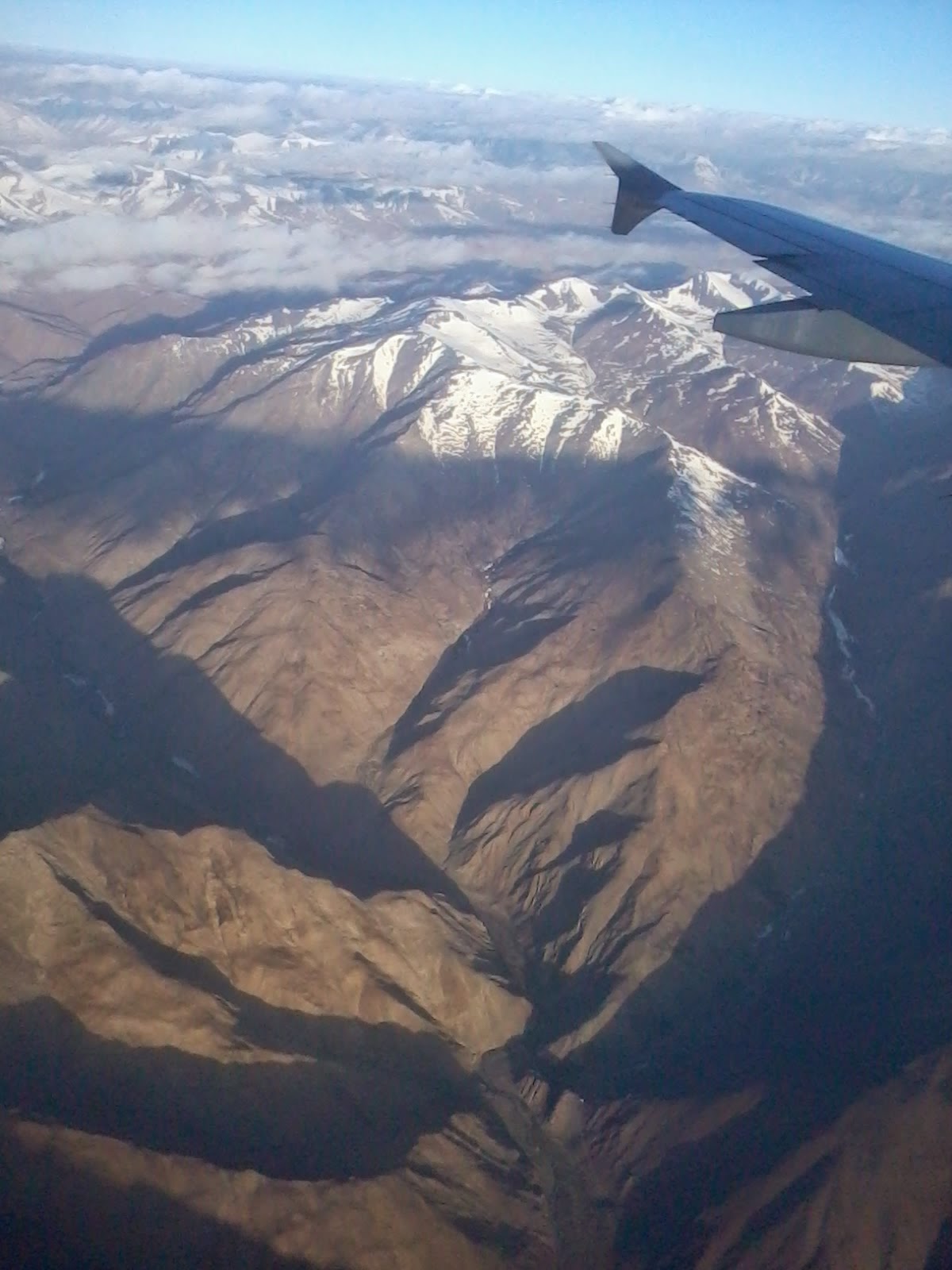
The Indian Himalayan Region (IHR), which occupies a stregetic position along the entire northern and eastern boundary of the country and administratively covers 10 states in their entirety. They are: J& K, Himachal Pradesh, Uttarakhand, Sikkim, Arunachal Pradesh, Nagaland, Manipur, Mizoram, Tripura, Meghalaya and two states partially(the hill districts of West Bengal and Assam) What we get from the Himalayan Region:
Serves as Habitat for millions
Acts as a giant carbon 'sink'
Innumerable goods ( Wood, flowers, herbs, food and cereal vareities, honey, livestock, tea, coffee and spices)
Provides water to around 50 crore people from its glaciers
Houses most important pilgrimage centres of Hinduism and Buddhism
Known for its Himalayan Bio-diversity
Plays a major role in deciding the climate of India, Bhutan and Nepal
Acts as a protective wall for India from aggressors
Has many tourists' destinations as hill stations, pilgrim centres, health centres, meditation centres, trekking and mountaneering platforms and motor racing /canoe /para gliding centres
What is the problem now? The continuing onslaught of man over ecology is disturbing. The unbridled population growth and migration, tourists' influx in millions, unchecked building activity, unscientific way of disposing garbage, poor waste managemet, hurdles in transport, ethnic ways of tradition which compounds environment issues, mushrooming hospitality industry, factories' abominal growth, use of pesticides and chemicals in agricultural lands which drain water into the rivers, cattle and human bathing in millions and so on has reduced the rivers of this region as mere gutter carriers. The recent Uttarakhand Floods is a warning. Rapid unplanned growth of all hill towns and villages and the desire for the so called 'growth' has made people discard all rules and guidelines in construction and allied activities. When nature returns with fury we the humans have no answer and can only count the bodies of men and cattle and assess damages to propeties. Steps Taken The HP governemt has banned the use of plastic carry bags which are below 70 microns and a total ban on plastics is on since 2009. But the implemetation is so tardy and the people who visit the state do not co operate. What the Toutists/ Pilgrims do? Just throw on the sides of the roads or on the roads things like empty tetra packs of cold drinks, packed fast food items' packing materials, empty packs of varieties of snacks, oil/shampoo saches and so on. The most kind and the patritoic throw the empty beer/ alchocol bottles into the rivers/rivulets or on roadsides and the most godly smash them on roads or on the hills and derive 'cruel pleasure'. What can the govt. do? Not much. It is for the tourists to conserve and preserve their wonderful treasure in all possible wasys. It is practically impossible to guard all our water bodies and our hill stations by posting millions of men in uniform.
But the goverment can ban the sale and transfer of lands/immovable propeties to outsiders as in Kashmir. All the Himalayan states can be protected from the onslaught of the people from the main land.
Limiting the influx of tourists and fixing quota for each state and season
Imposing heavy fine on vioaltors of rules
Helping the local bodies to manage solid/liquid waste and help create necessary infrastructure for the job.
Taking the help of religious heads to spread the message of eco-friendly darhsans/yatras/rituals
Making the pilgrims contribute their time/service in maintaining the temple precincts ( as done in Gurudhwaras)
Banning the manufacture/distribution/carrying/using materials that are non-bio-degraddable
Encouraging companies to go for eco friendly pacakaging
Supplemting the income of the local peoples/communities with monthly monetary aids to help them compensate the loss they may suffer due to the reduced inflow of tourists/pilgrims
Awarenss and capacity building of the stakeholders.
Ban new construction and encourage people to go for eco-friendly building materials
Ban deforestation for any purpose
Incase of earth quake prone, seismic areas make the builders use earth quake resistant materials and constrution methods
The same may location-specific (Construction)
Learn that TOURISM can never be an industry and depended upon for economic growth.
When the land area is limited how to increase the income without increasing the number of visitors ( A right example is the queuing up of cars to Ooty from Mettuppalayam during the summer season)
Instead of creating new infrastructure like hotels encourage local communities to go in for 'community tourism' . (Scarcely experimented/done in some parts of our country. Homestays)
Make pilgrims participate in conservation/preservation of pilgrim centres ( Declare that all have to plant a sapling in the hill states as part of a ritual/ watering the plants/weeding the plants)
Collect environment fees, restrict entries and stay time restrictions
Screen the baggage of tourists for limiting non-bio degradable materials
Ensure the availability of local art and craft designs/ works at the originating stations. ( A Thanjavur - Agra platform in Thanjavur Junction can have Agra Peda on sale at Agra rates and at Agra the Thanjavur Plates can be made available at an affordable rate)
Help the local communities to improvise their native arts/crafts designs, agro products, herbal products, and their sale
Think of retaining our traditional modes of transport in eco-fragile regions. Horses, Donkeys, Poneys and Bulls may be supplied free of cost with mainenace too given and charging higher fees from the tourists - branding them as ' 'eco-tour', 'royal ride', 'earth tour', 'nature ride' etc.,
Make regulation a part of development
Impose motorised vehicle restriction beyond certain points and use traditional transport
Go for local food and drinks which do not require import of materials from other statesor towns
Energy Supply (26 % of 2004 global greenhouse gas emissions) - The burning of coal,natural gas and oil for electricity and heat is the largest single source of global greenhouse gas emissions)
Industry (19% of 2004 global greenhouse gas emissions) - Greenhouse gas emissions from industry primarily invovle fossil fuel s burned on-site at facilities for energy, also includes emissions from chemical, metallurgical and mineral transformation porocesses.
Land use, change and Forestry (17 % of 2004 global greenhouse gas emissions) - Greenhouse gas emissions from this sector primarily include Carbon dioxide emissions from deforestation, land clearing for agriculture and fires or decay of peat soil.
Agriculture (14 % of 2004 global greenhouse gas emissions)- This comes mostly from the management of agriculture soils ,livestock,rice production, and biogass burning.
Trasnportation (13 % of 2004 global greenhouse gas emissions)- This sector primarily invovles fossil fuels burned for road, rail, air and marine transportation. Almost 95% of the world's transportation energy comes from petroleum-based products.
Commerical and Residential Buildings (8% of 2004 global greenhouse gas emissions)- Emissions from this sector arise from on-site energy generation and burning fuels for heat in buildings or cokkoing in homes.
Waste and Wastewater (3% of 2004 global greenhouse gas emissions) - The largest source of greenhouse gas emissions in this sector is landfill methane (CH4), followed by waste water methane and nitrous oxide (N2O). Incineration of some waste products that were made with fossil fuels, such as plastics an synthetic textiles, also results in minor emissions of CO2.